
Aim: Assess how variations in ribosome composition structurally regulate translation.
The main aim of this theme is to assess how variations in ribosome composition regulate translation from a structural point of view.
An understanding of the structural impact of heterogeneity (e.g. via paralog switching, posttranslational modifications) on translation regulation is missing for most specialised ribosomes and is central to understanding common mechanisms of translational regulation by specialised ribosomes.
Our established structural approach to characterise specialised ribosomes involves:
1) Purifying candidate ribosomes and determining their protein composition, including by validating the identity and stoichiometry of protein subunits that potentially confer specialisation, by quantitative MS;
2) Characterising ribosome structure by cryo-EM and structural MS, to provide insight into the structural differences that drive specialisation.
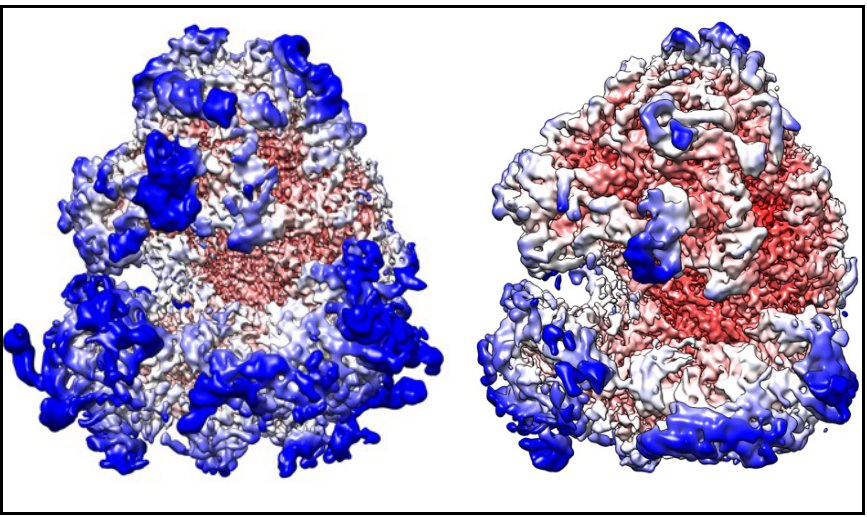
This workflow has allowed us to unravel composition and structural differences in ribosomal paralogs between Drosophila ribosomes isolated from testes and ovaries, and we will use it during the sLoLa to gain structural information on the specialised ribosomes we will purify.
To obtain further information on regions of the ribosome that have been historically challenging, we will adapt structural MS approaches for the study of ribosomes, including native MS, which allows unravelling the stoichiometry and composition of specialised ribosomes, and cross-linking MS, which allows probing for structural/dynamical changes in the ribosome.

Dr Juan Fontana (he/him)

Dr Anton Calabrese (he/him)

Dr Bulat Fatkhullin (he/him)
Cath Cockeram (she/her)

Dr Emma Thomson (she/her)